Vending Machine Market in Singapore (Part 2): Refined Operations and Digital Solutions新加坡自动售卖机市场观察(二):精细化运营与数字化出路
A look at refined operations for Singapore's vending machines and how digitalization opens new growth paths in a mature market.聚焦新加坡自动售卖机的精细化运营实践,探讨数字化如何为成熟市场打开新的增长出路。
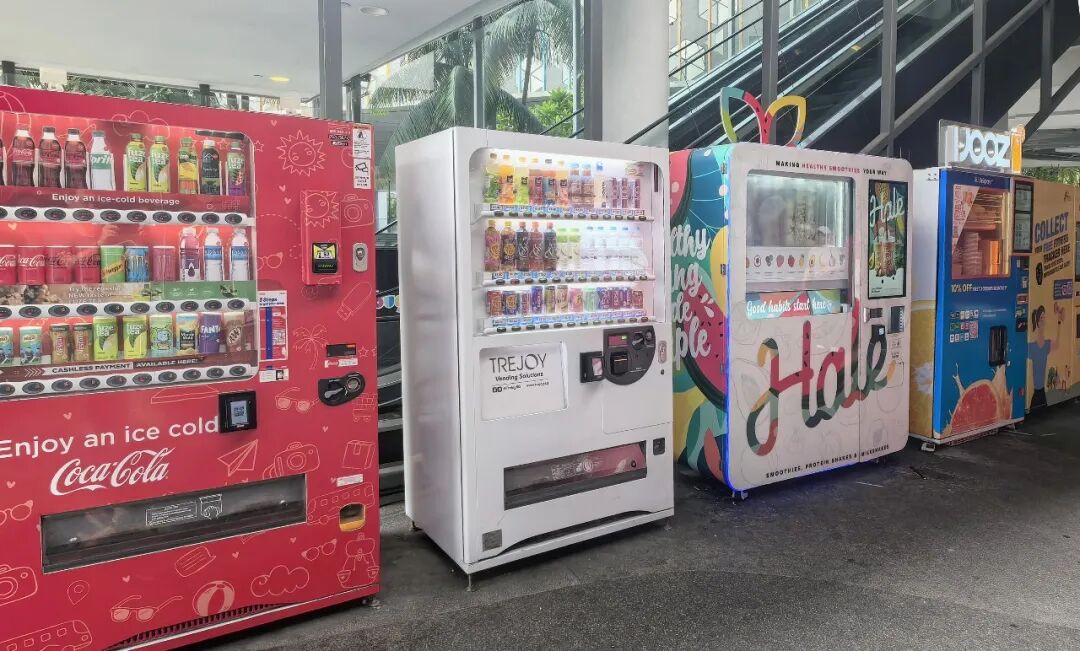
Vending is not a high-profit business
Vending machines can operate 24/7, but "unattended" does not equal low cost and high profit. The machine is just the front end; what truly determines revenue is location, product selection, restocking, payment, maintenance, and data management.
Singapore has no official per-machine revenue/transaction statistics.The numbers below are supplier estimates or enterprise cases, not national averages.But that does not prevent us from doing the math.
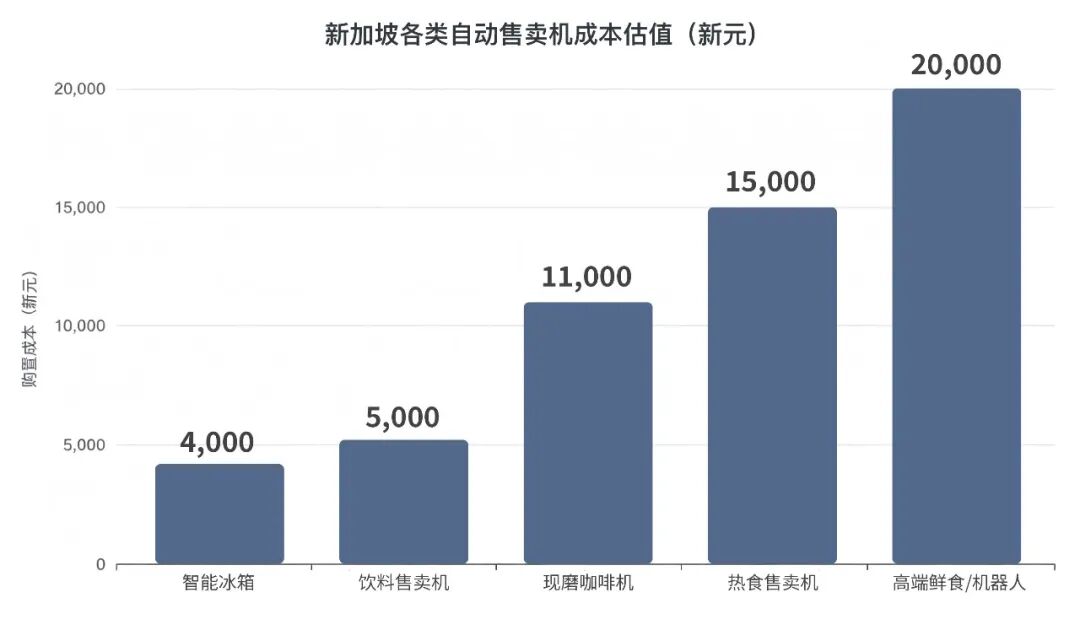
How much does it cost to buy a machine?
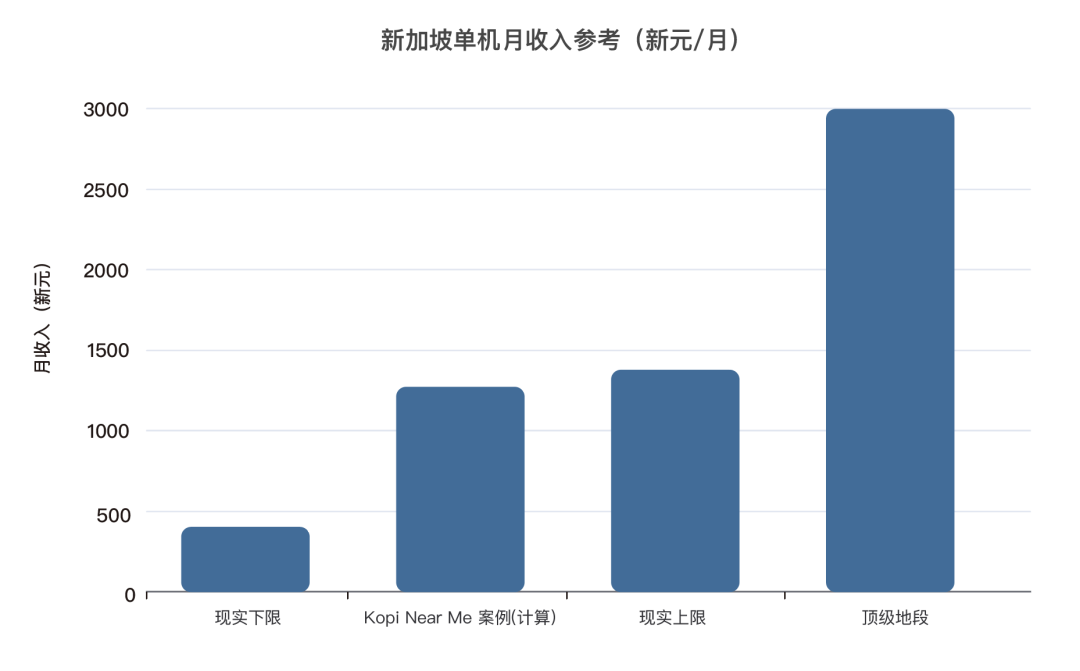
How much can one machine earn in a month?
The realistic range (based on multiple sources) is S$300–S$1,300/month, top locations can reach S$2,000–4,000+.
The most valuable "hard anchor" among them is Kopi Near Me ThisStartupcoffee vending machine, Vulcan Post reported its real numbers:
70 machines; Monthly revenue S$80,000–90,000; Per machine:≈S$1,143–1,286/month/machine(This is calculated from company data, not the national average it published).
Note:Kopi Near Me is a coffee machine fleet, gradually expanded from 1 to 70 machines; this number cannot be taken as a national average, but it is a rare anchor with real financial backing.
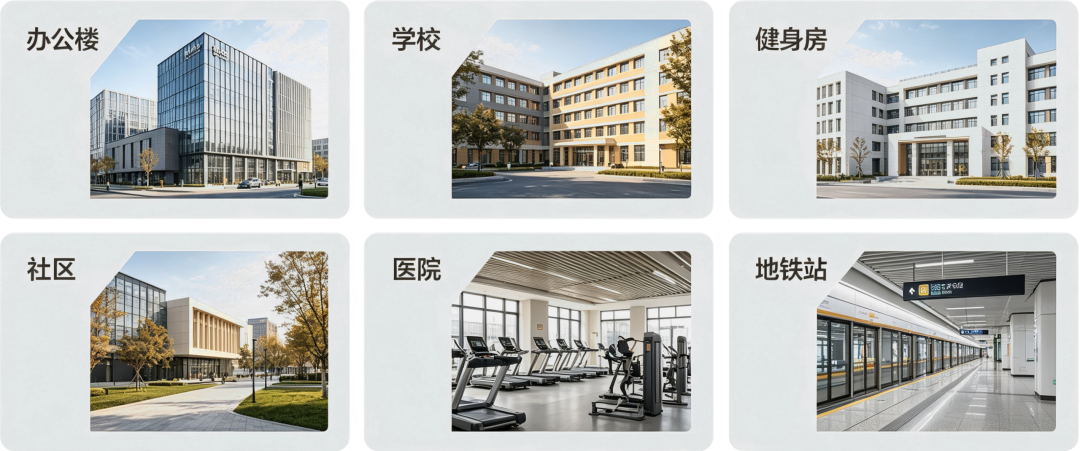
Office buildings, schools, hospitals, communities, gyms, and subway stations all have foot traffic, but consumption needs are different.
Office buildings suit coffee, breakfast, and afternoon tea; schools focus on price and high-frequency snacks; gyms suit energy drinks and healthy food; communities need daily necessities and nighttime supplies.
Therefore, you cannot use the same product mix for all machines. Operators need to build different location models based on demographics, time slots, purchase frequency, and price sensitivity, to decide machine type, product mix, new product cadence, and restocking frequency.
Margin and payback
- Product gross margin:Snacks/beverages 30–50%, hot food 20–35%;
- Payment rate:QR 0.4% vs credit card 2–3%(Detailed in previous article);
- Rent/site fee:S$200–1,500/month (or 10–20% of revenue);
- Electricity:Cooling about S$30–50/month; maintenance S$50–100/month;
- Payback period:Realistically about 12–24 months.
Putting it all together: a S$5,000 beverage machine, minus product costs, has monthly gross revenue of S$1,000; deduct site fees S$500, electricity S$40, maintenance S$75, payment fees S$25 — profit margin about 40%(Net S$360)Monthly net profit per machine is actually quite thin.
Vending is a "thin margin, scale, location" business. Per-unit profit is limited; only through scaled operations and continuous optimization of location and products can stable revenue be achieved.
From manual experience to data operations
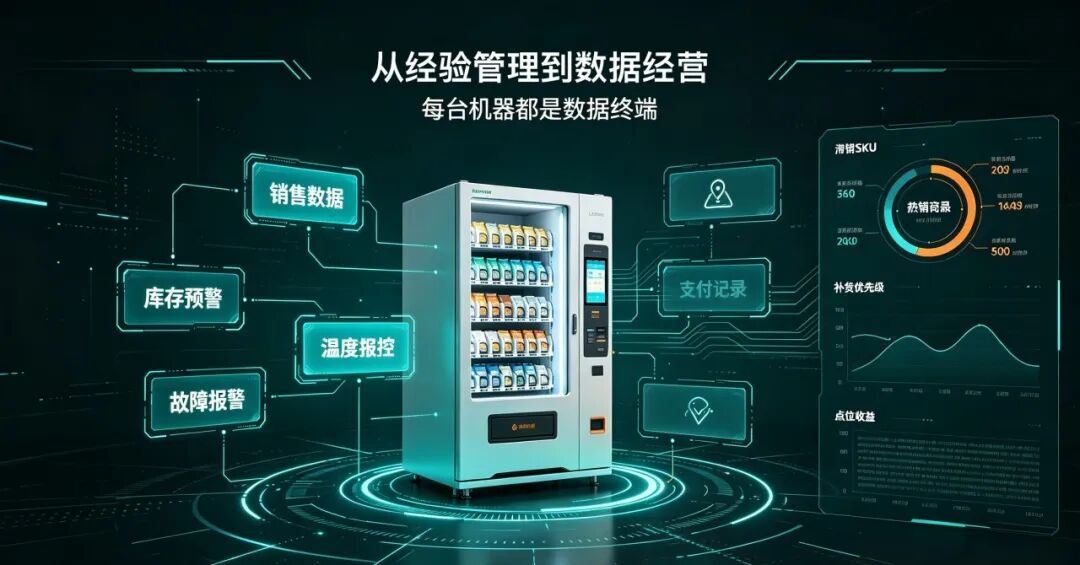
Traditional operations mainly rely on patrol staff to judge sales, inventory, and device status. But as machine numbers increase, it is hard to ensure efficiency manually alone.
Every device generates sales, inventory, payment, temperature, and fault data every day. Digital systems can help operators understand:
Which products sell best at different locations;
Which products are frequently out of stock or long-term slow-moving;
Which machines need priority restocking;
Which time slots have the highest sales;
Which locations cannot cover site costs;
Which devices have frequent faults.
When these questions can be answered in real time, operations can shift from "managing by experience" to "running on data."
Smart restocking directly impacts profit
Vending machine losses are often not due to products not selling, but untimely restocking, unreasonable inventory structure, or inefficient delivery routes.
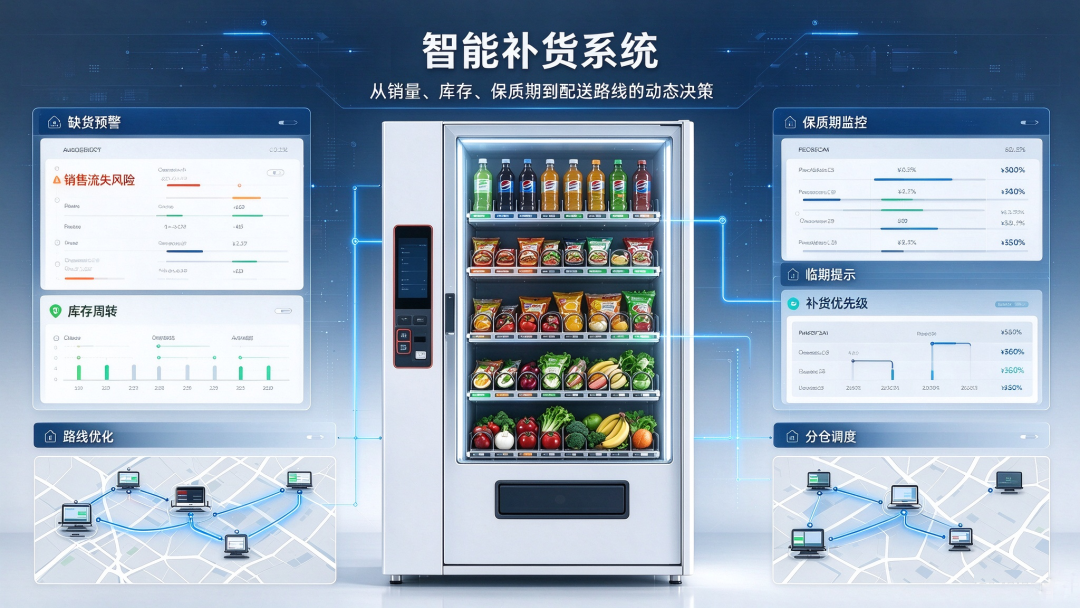
Stockouts cause lost sales, while excess inventory ties up capital and may lead to expiration and waste. Smart restocking systems should combine sales volume, inventory, shelf life, device location, and delivery routes to prioritize restocking.
High-volume products should have early warnings, while low-turnover products need price adjustments, reduced procurement, or category changes. Future restocking should not be "refill when empty," but shift to predictive inventory management.
Payment is both a collection tool and a data entry point
Singapore consumers are already accustomed to e-wallets, PayNow, and QR code payments. For vending machines, cashless payment not only reduces coin handling, but more importantly, records every transaction.
Once payment data is connected with product, inventory, and device information, operators can understand consumption time slots, product preferences, and price sensitivity at different locations.
From manual patrols to device network management
One machine breaking down may be just a repair; when hundreds of devices run simultaneously, management becomes a systems engineering project.
Digital platforms should monitor temperature, inventory, payment, door locks, cooling systems, and fault status in real time, and prioritize handling based on anomaly severity. This reduces ineffective patrols and improves restocking and maintenance efficiency.
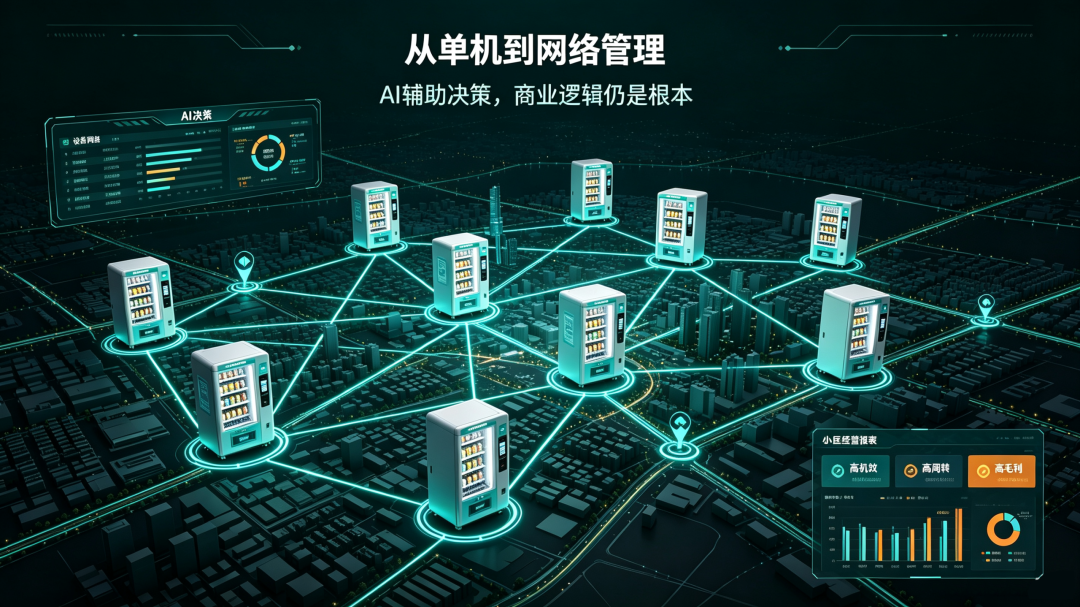
Machines are no longer isolated devices, but connected retail terminals. What operators manage is no longer "a few machines," but a retail network that continuously generates data.
AI's value lies in supporting decision-making
AI cannot make a poorly located site profitable on its own, but it can help operators identify demand changes faster.
The system can combine weather, time, location, demographics, holidays, and historical sales to predict product demand; it can also participate in product recommendation, restocking prioritization, anomaly detection, and location assessment.
However, computer vision, smart lockers, and unattended refrigerators already have many commercial cases, while face payment and fully unattended solutions still need to distinguish between pilot and scaled applications. Technology must ultimately return to cost, stability, and long-term operating results.
The ultimate goal of digitalization is to improve per-machine efficiency
Unattended retail digitalization is not about making systems more complex, but about bringing each machine closer to profitability.
A complete solution should cover device management, payment integration, inventory management, smart restocking, product analytics, location assessment, and business reports. Only when these links are truly connected can operators know which machines are profitable, which products are worth keeping, which locations need adjustment, and where to place the next machine.
The future of Singapore's vending industry is not simply increasing machine numbers, but improving the operating efficiency of each machine. From "selling machines" to "selling systems," from "manual patrols" to "data operations" — this is the real digital path for unattended retail.
Singapore Through the Lens: Four On-site Details
Beyond data, these street scenes we captured say more than reports.
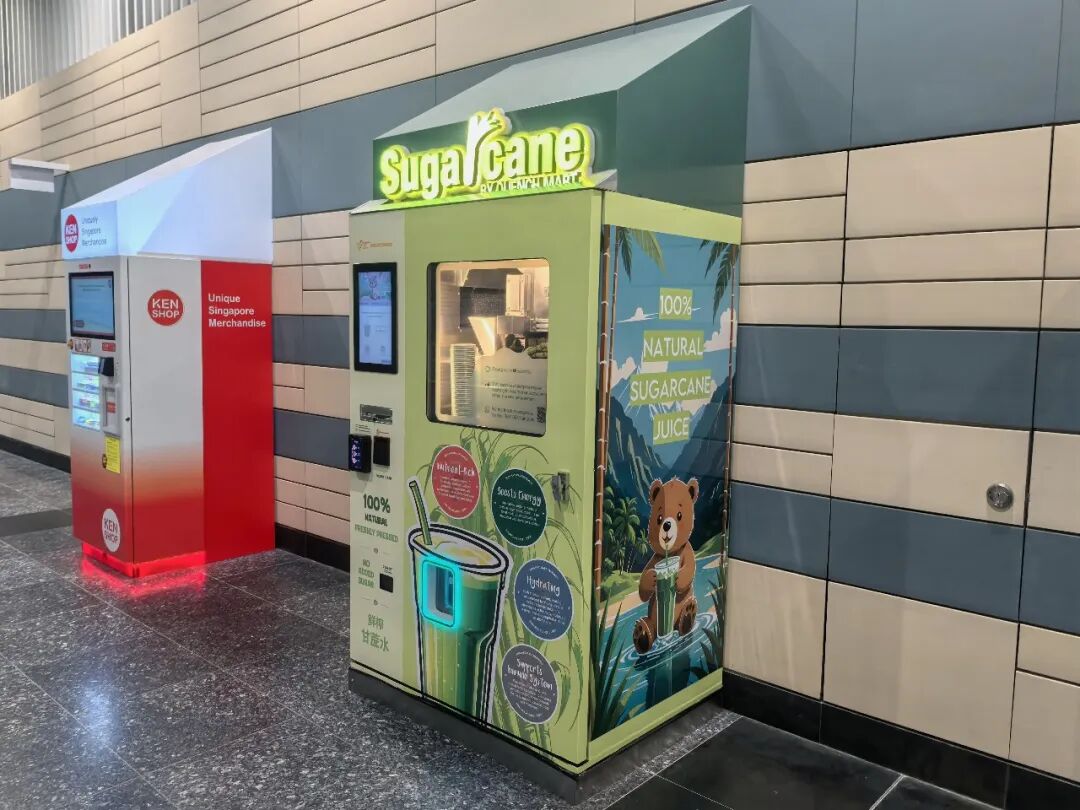
▲ "Singapore Souvenirs" specialty machine on the left, 100% fresh sugarcane juice machine on the right
Detail 1: Categories have started to "specialize."On the same wall, two machines do two different businesses: one sells travel souvenirs, the other makes fresh sugarcane juice with "No Sugar" clearly marked on the body. This shows that Singapore's machines have long since moved beyond just "selling bottled water," and are now segmented by scenario and "by category" —When consumption needs are specific enough, machines can be specialized enough。
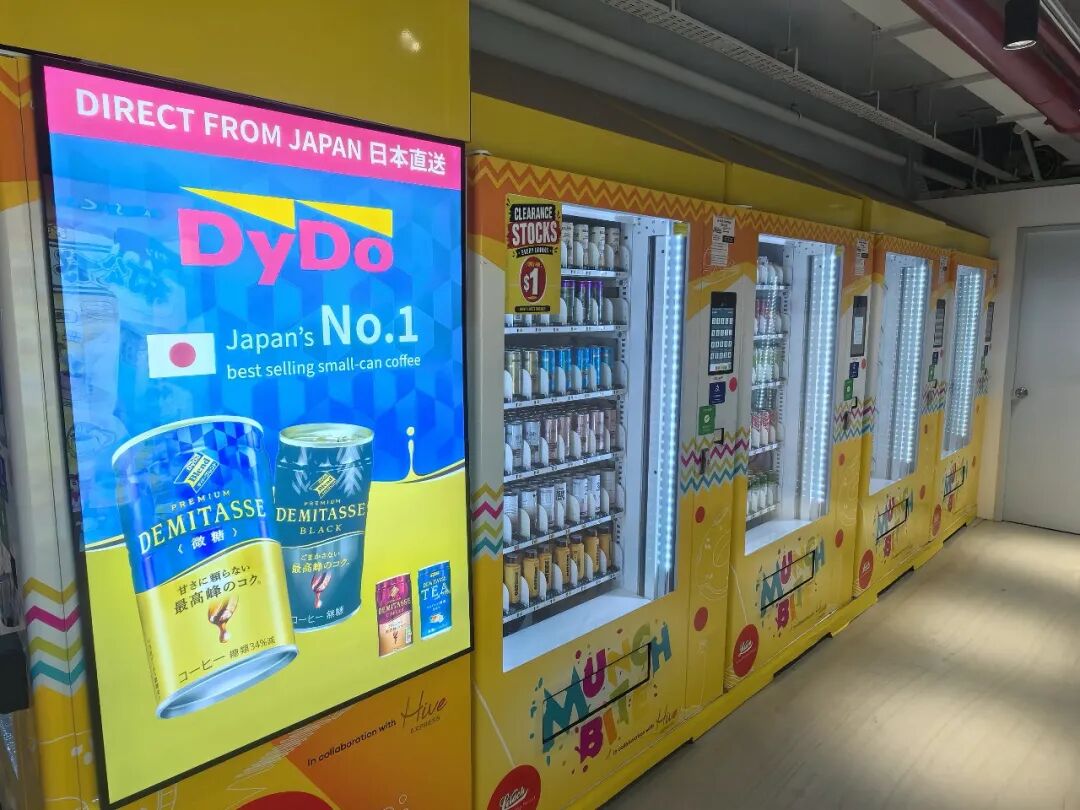
▲ Row of machine matrices: brand ad screen on the left, "Clearance Stocks, now only S$1" sticker on the second machine
Detail 2: Machines are not just "selling goods," but also "ad space" and "promotional terminals."In this row of FairPrice machine matrices, the most prominent screen is reserved for brand advertising (DyDo Japanese canned coffee); the second machine has a "Clearance Stocks / NOW ONLY $1" clearance sticker directly on it. This shows two things: advertising revenue is a real second revenue curve; and dynamic near-expiry promotions are an operating tool already in use on-site — just still done manually with stickers, which is very basic.
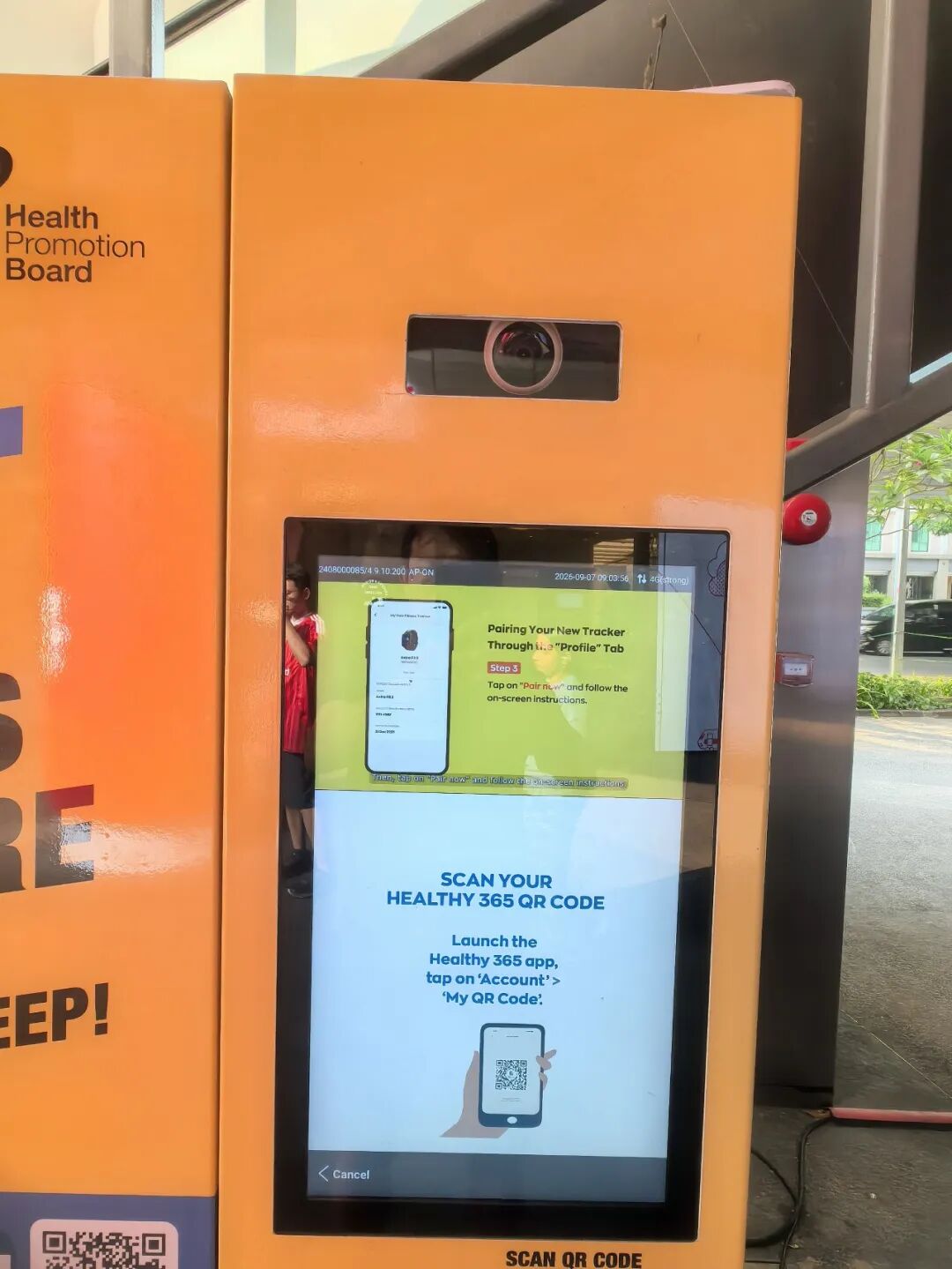
▲ HPB health self-service terminal: scan QR to pair with health programs
Detail 3: The biggest "customer" of self-service terminals may be the government.This orange device is not for selling goods; it belongs to the Health Promotion Board (HPB). Scan the Health 365 QR code to pair with health tracking programs and receive tasks. From 1,200 mask vending machines during the pandemic to today's health terminals, Singapore has already treated self-service devices as the "last meter" of public services — this is a scenario logic that pure commercial operators find hard to enter, but worth learning from.
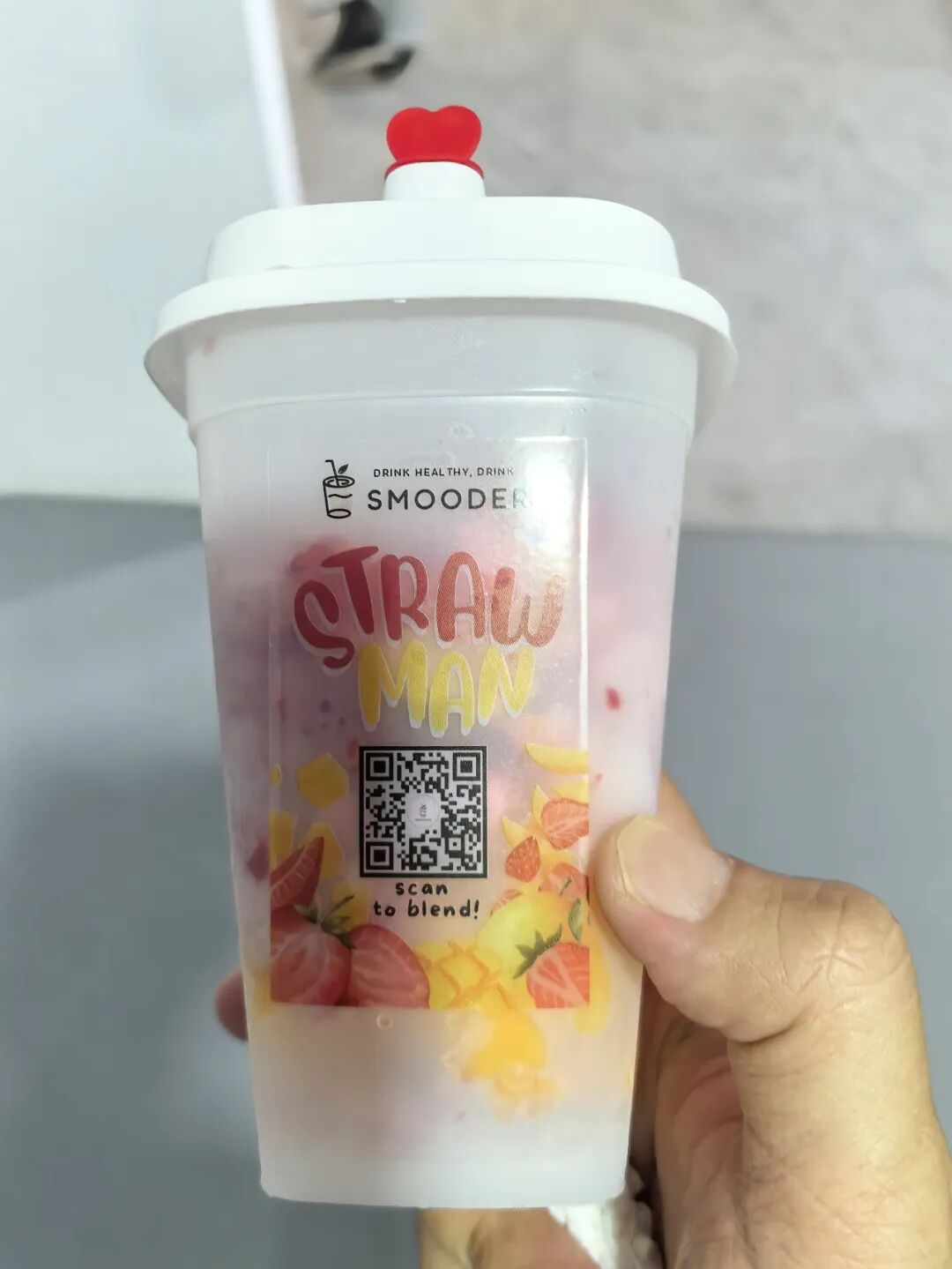
▲ QR code printed on cup, scan to "freshly made" — leaving preparation to the machine
Detail 4: The interaction entry has shifted from "coin insertion" to "QR scan."This smoothie cup has a QR code and "Scan to blend" printed on it; after scanning, the machine completes the blending. In other words, payment, ordering, and preparation are compressed into a single scan — this is also on-site evidence for what we emphasized in the second article: "QR scanning is the main entry point for unattended retail."
自动售卖机不是暴利生意
自动售卖机可以24小时营业,但“无人”并不等于低成本、高利润。机器只是前台,真正决定收益的,是点位、选品、补货、支付、维护和数据管理。
新加坡没有官方的单机收入/交易统计。下面的数字,都是供应商估算或企业案例,不是全国平均。但这不妨碍我们把账算清楚。
买一台机器要花多少钱买?
一台机器一个月能收多少?
现实区间(综合多个来源)是 S$300–S$1,300/月,顶级地段能做到 S$2,000–4,000+。
其中最有价值的一个"硬锚点",是 Kopi Near Me 这家初创咖啡贩卖机,Vulcan Post 报道了它的真实数字:
70 台机器; 月营收 S$80,000–90,000; 换算单机:≈S$1,143–1,286/月/台(这是我们根据公司数据算出来的,不是它公布的全国平均)。
注意:Kopi Near Me 是咖啡机,且机队从 1 台逐步扩到 70 台,这个数字不能当作全国平均,但它是一个难得的、有真实财务背书的锚点。
办公楼、学校、医院、社区、健身房和地铁站虽然都有客流,但消费需求并不相同。
办公楼适合咖啡、早餐和下午茶;学校更关注价格和高频零食;健身房适合功能饮料和健康食品;社区则需要日用品和夜间补给。
所以,不能用同一套商品组合覆盖所有机器。运营商需要根据人群、时段、消费频次和价格接受度,建立不同的点位模型,决定设备类型、商品结构、上新节奏和补货频率。
毛利和回本
- 产品毛利率:零食/饮料 30–50%,热食 20–35%;
- 支付费率:扫码 0.4% vs 信用卡 2–3%(上一篇已详述);
- 租金/场地费:S$200–1,500/月(或营收 10–20%);
- 电费:制冷机约 S$30–50/月;维护 S$50–100/月;
- 回本周期:现实约 12–24 个月。
把账串起来:一台机器成本S$5,000 的饮料机,去除商品成本,月毛收入 S$1000,扣掉场地 S$500、电费 S$40、维护 S$75、支付费S$25,利润率 40%左右(赚S$360)单机月净利其实很薄。
自动售卖机是一门“薄利、规模、位置”的生意。单台利润有限,只有通过规模化运营和持续优化位置与商品,才能形成稳定收益。
从人工经验转向数据运营
传统运营主要依靠巡店人员判断销量、库存和设备状态。但当机器数量增加后,仅靠人工很难保证效率。
每台设备每天都会产生销售、库存、支付、温度和故障数据。数字化系统可以帮助运营商了解:
哪些商品在不同点位卖得最好;
哪些商品经常缺货或长期滞销;
哪些机器需要优先补货;
哪些时段销量最高;
哪些点位无法覆盖场地成本;
哪些设备存在高频故障。
当这些问题能够被实时回答,运营才能从“凭经验管理”转向“用数据经营”。
智能补货,直接影响利润
自动售卖机的损失,很多时候不是商品卖不出去,而是补货不及时、库存结构不合理或运输路线低效。
缺货会造成销售流失,库存过多则可能占用资金,甚至带来过期和损耗。智能补货系统应综合销量、库存、保质期、设备位置和配送路线,安排补货优先级。
高销量商品应提前预警,低周转商品则需要调整价格、减少采购或更换品类。未来的补货,不应是“空了再补”,而应转向预测式库存管理。
支付既是收款工具,也是数据入口
新加坡消费者已经习惯电子钱包、PayNow和二维码支付。对自动售卖机而言,无现金支付不仅减少硬币处理,更重要的是能够记录每一笔交易。
支付数据与商品、库存和设备信息连接后,运营商可以了解不同点位的消费时段、商品偏好和价格反应。
从人工巡检走向设备网络管理
一台机器出现故障,可能只是一次维修;数百台设备同时运行时,管理就会变成系统工程。
数字化平台应实时监控温度、库存、支付、门锁、制冷系统和故障状态,并根据异常等级安排处理顺序。这样既能减少无效巡检,也能提高补货和维修效率。
机器不再是孤立设备,而是联网的零售终端。运营商管理的也不再是“几台机器”,而是一张持续产生数据的零售网络。
AI的价值,在于辅助决策
AI不能让一个位置不佳的点位自动盈利,但可以帮助运营商更快识别需求变化。
系统可以结合天气、时间、地点、人群、节假日和历史销量,预测商品需求;也可以参与商品推荐、补货排序、异常识别和点位评估。
不过,计算机视觉、智能柜和无人冰箱已有较多商业案例,而刷脸支付、完全无人化等方案仍需区分试点与规模化应用。技术最终仍要回到成本、稳定性和长期运营效果。
数字化的最终目标,是提高单机效率
无人零售数字化不是让系统更复杂,而是让每台机器更接近盈利目标。
完整的解决方案应覆盖设备管理、支付接入、库存管理、智能补货、商品分析、点位评估和经营报表。只有这些环节真正打通,运营商才能知道哪台机器赚钱、哪些商品值得保留、哪个点位需要调整,以及下一台机器应该放在哪里。
新加坡自动售卖行业的未来,不是简单增加机器数量,而是提升每台机器的经营效率。从“卖机器”到“卖系统”,从“人工巡店”到“数据运营”,这才是无人零售真正的数字化出路。
镜头里的新加坡:四个现场细节
数据之外,我们在街头拍到的这几个画面,比报告更能说明问题。
▲ 左边是"新加坡纪念品"专卖机,右边是 100% 现榨甘蔗汁机
细节一:品类已经开始"专门化"。同一面墙,两台机器做两门生意:一台卖旅游纪念品,一台现榨甘蔗汁、机身上明确标着" No Sugar"。这说明新加坡的机器早已不停留在"卖瓶装水",而是按场景、"按品类"去切分——消费需求足够细,机器就能足够专。
▲ 整排机器矩阵:左侧是品牌广告屏,第二台贴着"Clearance Stocks,现在只要 S$1"
细节二:机器不只是"卖货的",还是"广告位"和"促销终端"。这排 FairPrice 机器矩阵里,最显眼的一块屏留给了品牌广告(DyDo 日本罐装咖啡);而第二台机器上直接贴着"Clearance Stocks / NOW ONLY $1"的临期清货标。这说明两件事:广告收入是真实存在的第二收入曲线;而临期动态促销,是现场就在用的运营手段——只是靠人贴标签,还很原始。
▲ 新加坡保健促进局(HPB)的健康自助终端:扫码配对健康计划
细节三:自助终端最大的"客户",可能是政府。这台橙色设备不是卖货的,属于新加坡保健促进局(HPB),扫 Health 365 的二维码就能配对健康追踪计划、领取任务。从疫情期间的 1,200 台口罩机,到今天的健康终端,新加坡已经把自助设备当成公共服务的"最后一米"——这是纯商业运营商很难进入、但值得学习的场景逻辑。
▲ 杯身印着二维码,扫码即"现调"——把制作环节交给机器
细节四:交互入口已经从"投币"变成了"扫码"。这杯果昔的杯身上印着二维码和"Scan to blend",用户扫码后由机器完成混合。也就是说,付款、下单、制作三个动作,被压缩进一次扫码里——这也是我们在第二篇里强调"扫码是无人零售主入口"的现场依据。