OpsClaw: The AI Operations Officer for New Retail, Making Unmanned Vending Machines Self-diagnosingOpsClaw:新零售行业的AI运维官,让无人售卖设备“自己会看病”
Jingpin Hitech launches OpsClaw, an AI operations officer that gives unmanned vending machines self-diagnosis and proactive fault alerts.京品高科推出 AI 运维官 OpsClaw,让无人售卖设备具备自诊断能力,主动发现并预警故障。
Woken up in the middle of the night by a"vending machine offline"alert jolted awake, operations manager rushed to the site the next day——half a day gone.This is the daily routine that countless unattended retail operators don't want to face, yet have to face.

The operations pain of unattended retail
Devices are scattered across malls, subways, factories, and office buildings across the city,24 hours of non-stop operation. Any tiny fault——SD storage full, network down, serial port stuck, protocol parsing failed——can all continue for hours or even days without human intervention.
The traditional approach is "alert platform + human response": monitoring detects anomaly → pushes alert → operator sees it → goes to check → goes to fix.
But this model has two hard flaws:
- × Alert fatigue——90% 's alerts are "known issues" and get ignored after operator fatigue;
- × Response delay——No one on-site 24 hours of monitoring, from alert sent to human handling, often takes1-3days.
To break this deadlock, Jingpin Gaoke officially releasedBuilt specifically for new retail scenariosAIOps Officer——OpsClaw 。
OpsClaw What is it?
OpsClaw 's name comes from Operations(operations/operations) and Claw(claw/claw). We want it to dive deep into the system layer like a claw,precisely captures anomalies, powerfully executes repairs, and stably controls resources.
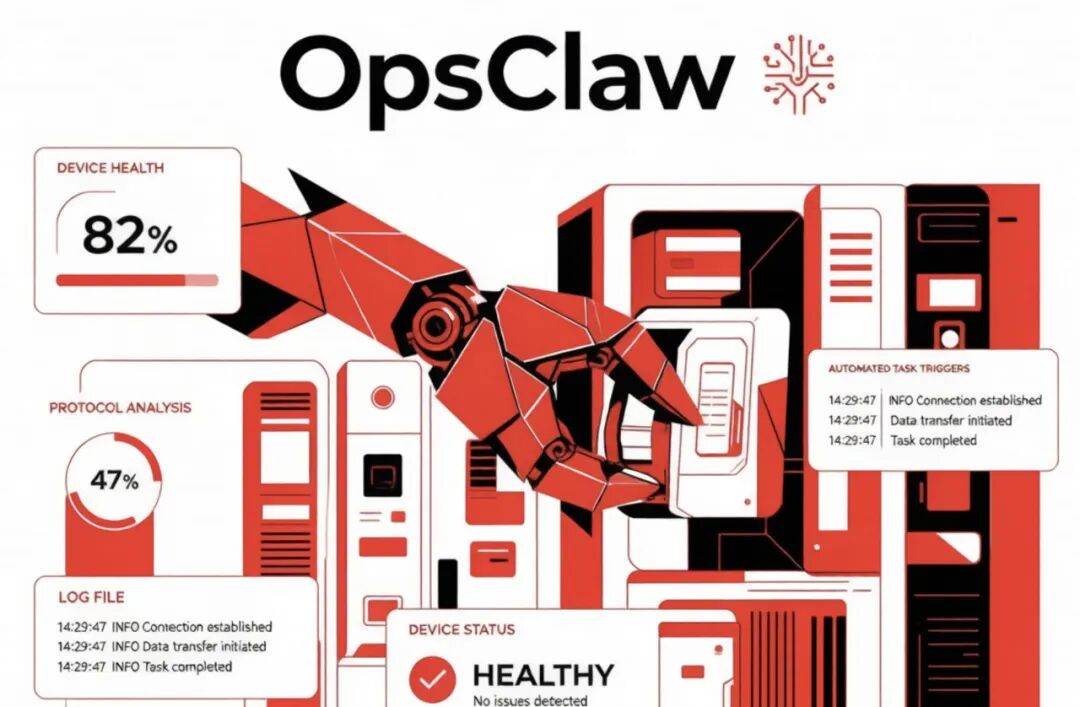
It is not just an alert platform. Starting from symptoms, it searches for evidence across devices, protocols, and logs, then translates technical judgments into actionable steps on-site. It can dive deep into the device layer like a claw, capturing anomalies, diagnosing problems, and even automatically executing repairs when authorized.
Five core capabilities: deep into the layer, precise closed-loop
OpsClawhas built a complete empowerment matrix around Android industrial control devices and remote operations scenarios:
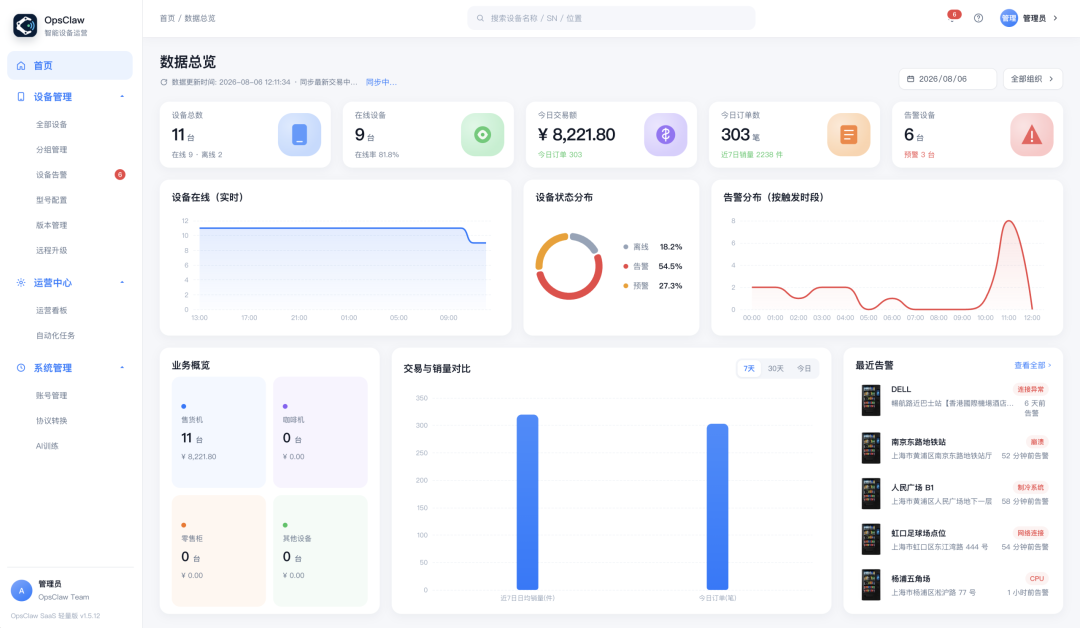
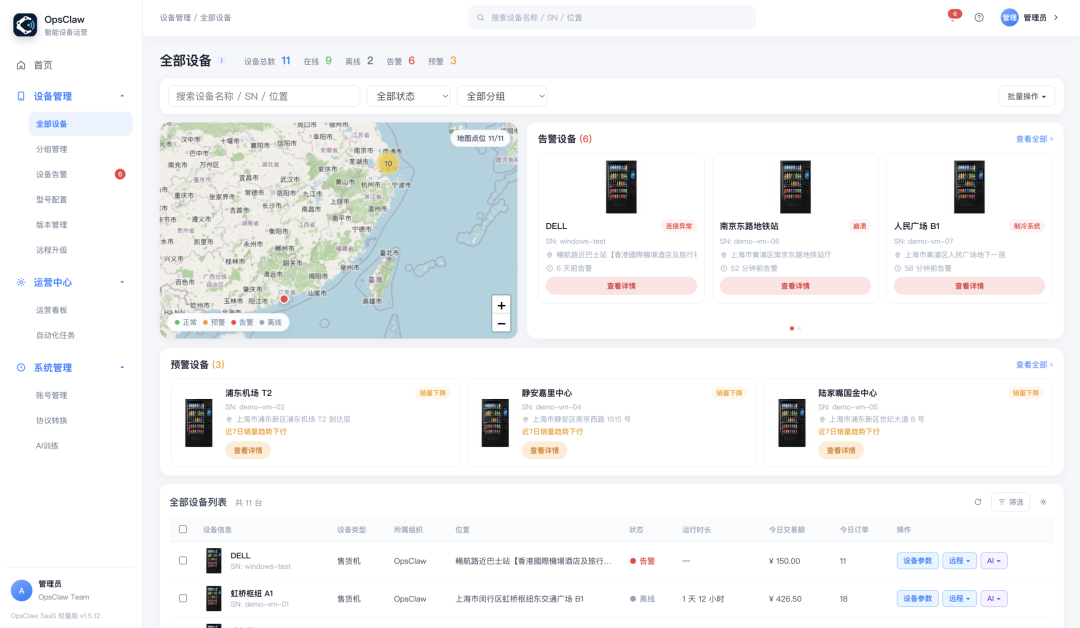
1.Device health alerts: The system can monitor storage space,CPU usage, memory usage, and temperature, and presents abnormal items, severity levels, current values, and device status in a structured, at-a-glance format.
2.Remote evidence acquisition:With authorization, operators can remotely access Android device files and related logs, reducing the cost of repeated on-site visits or cross-team file transfers just to gather information.
4.AIFault analysis: Facing communication anomalies, device offline, or resource alerts, the systemDiagnostic conclusions, root cause, evidence logs, and recommended actionsorganized onto the same page, making the troubleshooting process easier to understand, review, and collaborate on.
5.Automated tasks:For repetitive actions with clear boundaries and already authorized,can trigger automated tasks according to rules, freeing up manpower.
AIDiagnosis: is a set of evidence, not a single“black box”conclusion
OpsClaw's core valueLet“Detect anomaly—Understand the cause—execute—Confirm recovery”Form a trackable closed loop。
In communication anomaly scenarios,OpsClaw It presents diagnostic reports, root cause analysis, evidence and logs, and recommended actions separately. Operators can see the conclusion first, then drill down to check connection status and change records, and decide whether to restart the device, check the network, or convert to a ticket.
This approach reduces“Only reports faults, doesn't explain the basis”'s black-box feel, and allows operations, customer service, and technical staff to collaborate on the same information: non-technical roles can understand impact and priority, while engineers can continue to verify evidence and execution boundaries.
OpsClaw What changes can it bring?
Shorter localization path: From alerts, status, and logs to causes and recommendations, all presented centrally, reducing back-and-forth information transfer.
Less on-site dependency:remotely access files, debug serial ports, and execute within safe authorized scope Shell troubleshooting, so some problems don't need to wait for personnel to arrive on-site.
More replicable operations experience: deposits the evidence, actions, and results used during troubleshooting, making it easier to form reusable rules and knowledge for the next time.
Clearer collaboration boundaries:AI is responsible for assisting understanding and recommendations, rules are responsible for executing repetitive actions with clear boundaries, and engineers are responsible for authorization, review, and exception handling.
First clarify complex problems, then make repetitive actions efficient
AI The value of operations is not handing all problems to the model, nor letting the system control devices without boundaries. The truly reliable direction is to let AI help the team understand devices, organize evidence, and propose next steps, while keeping authorization, auditing, human confirmation, and rollback mechanisms in the process.
半夜被一条「售货机离线」告警震醒,运营经理第二天赶去现场——半天没了。这是无数无人零售从业者不愿面对,却又不得不面对的日常。
无人零售的运维之痛
设备分散在城市的商场、地铁、工厂、写字楼,24 小时不间断运转。任何一个微小的故障——SD 卡满了、网络断了、串口被卡住、协议解析失败——都可能在没有人工介入的情况下持续数小时甚至数天。
传统的做法是「告警平台 + 人工响应」:监控发现异常 → 推送告警 → 运维看到 → 去查 → 去修。
但这套模式有两个硬伤:
- × 告警麻木——90% 的告警是「已知问题」,人工疲劳后会被忽略;
- × 响应延迟——现场没人 24 小时值守,告警发出到人工处理,经常需要1-3天。
为了打破这一僵局,京品高科正式发布专为新零售场景打造的AI运维官——OpsClaw 。
OpsClaw 是什么?
OpsClaw 的命名来自 Operations(运维/运营)与 Claw(爪/钳)。我们想让它像利爪一样深入系统底层,精准抓取异常、强力执行修复、稳固掌控资源。
它不只是一个告警平台。而是从现象出发,跨设备、跨协议、跨日志寻找证据,再把技术判断翻译成现场可以执行的动作。它能像利爪一样深入设备底层,捕获异常、诊断问题,甚至在授权下自动执行修复。
五大核心能力:深入底层,精准闭环
OpsClaw围绕安卓工控设备与远程运维场景,构建了完整的赋能矩阵:
1.设备健康告警: 系统可关注存储空间、CPU 使用率、内存使用率和温度等关键指标,并把异常项目、等级、当前值和设备状态结构化呈现,一目了然。
2.远程证据获取:在获得授权的前提下,运维人员可以远程获取安卓设备文件与相关日志,减少为了收集信息反复到现场或跨团队传文件的成本。
4.AI故障分析: 面对通信异常、设备离线或资源告警,系统把诊断结论、根本原因、证据日志和建议行动组织到同一页面,让排查过程更容易理解、复核与协同。
5.自动化任务:对于边界清晰、已经授权的重复动作,可按规则触发自动化任务,解放人力。
AI诊断:是一组证据,而不是一个“黑盒”结论
OpsClaw的核心价值让“发现异常—理解原因—执行—确认恢复”形成可追踪的闭环。
在通信异常场景中,OpsClaw 会把诊断报告、根本原因分析、证据与日志、建议行动分开呈现。运维人员既能先看到结论,也能继续下钻检查连接状态与变化记录,再决定是否重启设备、检查网络或转为工单处理。
这种方式减少了“只报故障、不讲依据”的黑盒感,也让运营、客服和技术人员在同一份信息上协作:非技术岗位能够理解影响与优先级,工程师则可以继续核对证据和执行边界。
OpsClaw 能带来什么改变?
更短的定位路径: 从告警、状态、日志到原因与建议集中呈现,减少信息来回搬运。
更少的现场依赖:在安全授权范围内远程获取文件、调试串口和执行 Shell 排查,让部分问题不必等待人员到场。
更可复制的运维经验: 把一次排障过程中用到的证据、动作和结果沉淀下来,便于形成下一次可以复用的规则与知识。
更清楚的协作边界:AI 负责辅助理解和建议,规则负责执行边界明确的重复动作,工程师负责授权、复核和例外处理。
先把复杂问题说清楚,再把重复动作做高效
AI 运维的价值,不是把所有问题都交给模型,更不是让系统无边界地控制设备。真正可靠的方向,是让 AI 帮助团队看懂设备、整理证据、提出下一步,同时把授权、审计、人工确认和回滚机制留在流程里。