BosTech: From Cash-Only Machines to Unified Smart RetailBosTech:从纯现金机器到统一智慧零售
The retail network in Thailand upgraded with connectivity, digital payments, and centralized management platform.泰国的零售网络通过联网、数字支付与集中化管理平台完成升级。
The Challenge
As Thailand’s automated retail market accelerated, BosTech Engineering faced growing operational challenges during rapid expansion.
Despite its strong engineering foundation, the company encountered three major obstacles:
1. Fragmented Device Ecosystem
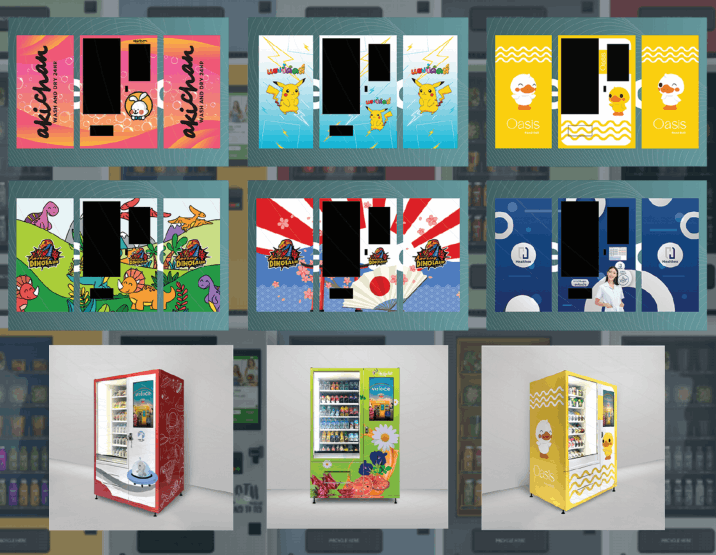
BosTech operated a highly diverse fleet of vending equipment, including:
- Refurbished Japanese Fuji vending machines
- Coffee vending machines
- Instant noodle vending machines
- Fresh orange juice machines
- Popcorn vending machines
- Ice cream vending machines
Each machine type ran on different software systems, making centralized management nearly impossible.
2. Outdated Cash-Only Payment Infrastructure
Many legacy vending machines only supported cash and coin payments, while Thailand’s QR payment ecosystem rapidly became the dominant consumer payment method.
3. Lack of Unified Retail Operations Software
Bostech lacked a centralized operational backend for:
- Inventory and warehouse management
- Remote software version control
- Membership and loyalty operations
- Automated financial reconciliation
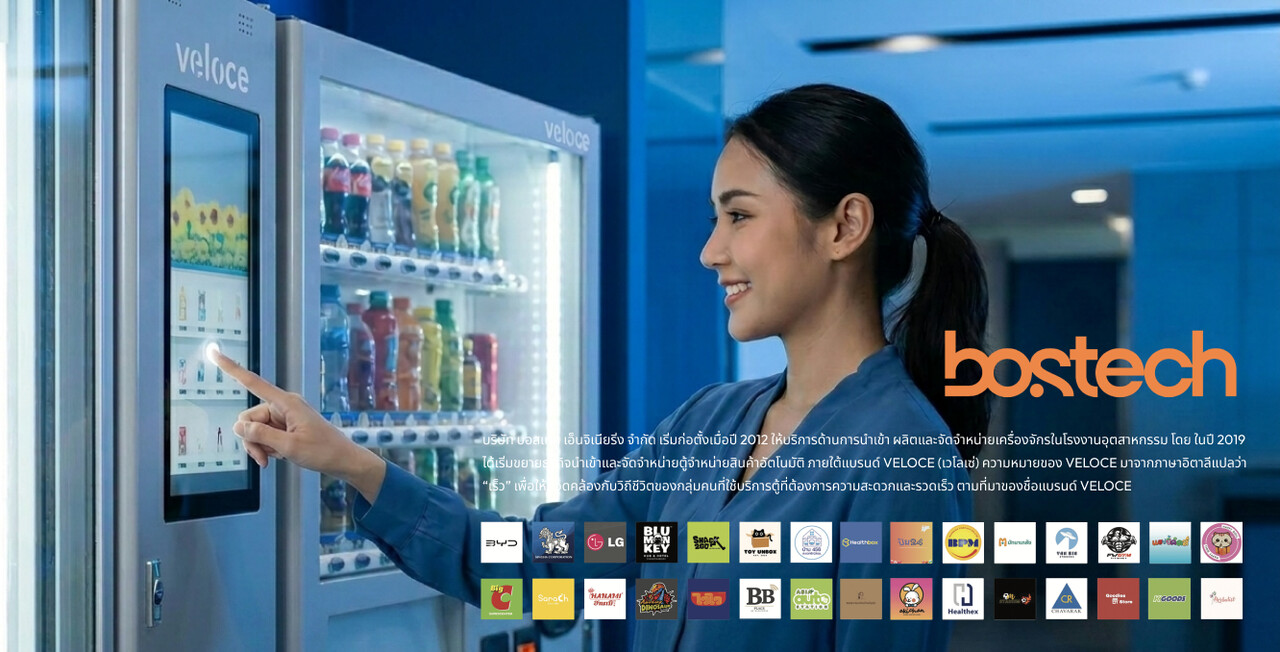
The challenge became even more critical because BosTech was not only operating its own vending machines, but also providing managed vending services for enterprise customers including BYD and Big C.
The Solution: One Unified Platform for Every Machine
Instead of replacing existing hardware, we designed a phased modernization strategy focused on:
- Preserving existing machine assets
- Standardizing software infrastructure
- Integrating Thailand’s local payment ecosystem
- Building scalable operational capabilities for both BosTech and its clients
Phase 1: Hardware Retrofit for Legacy Japanese Vending Machines
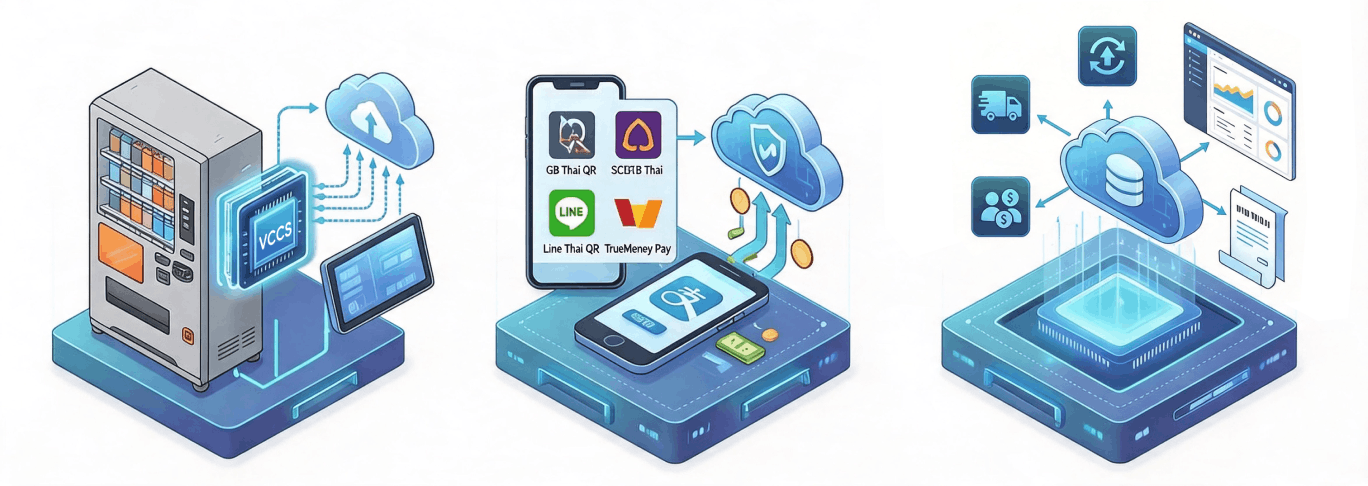
To modernize second-hand Japanese vending machines such as Fuji models, we upgraded the machines with smart retail communication infrastructure.
- Smart Android Touchscreen Upgrades
- VCCS Integration
- Unified Software Migration for New Machines
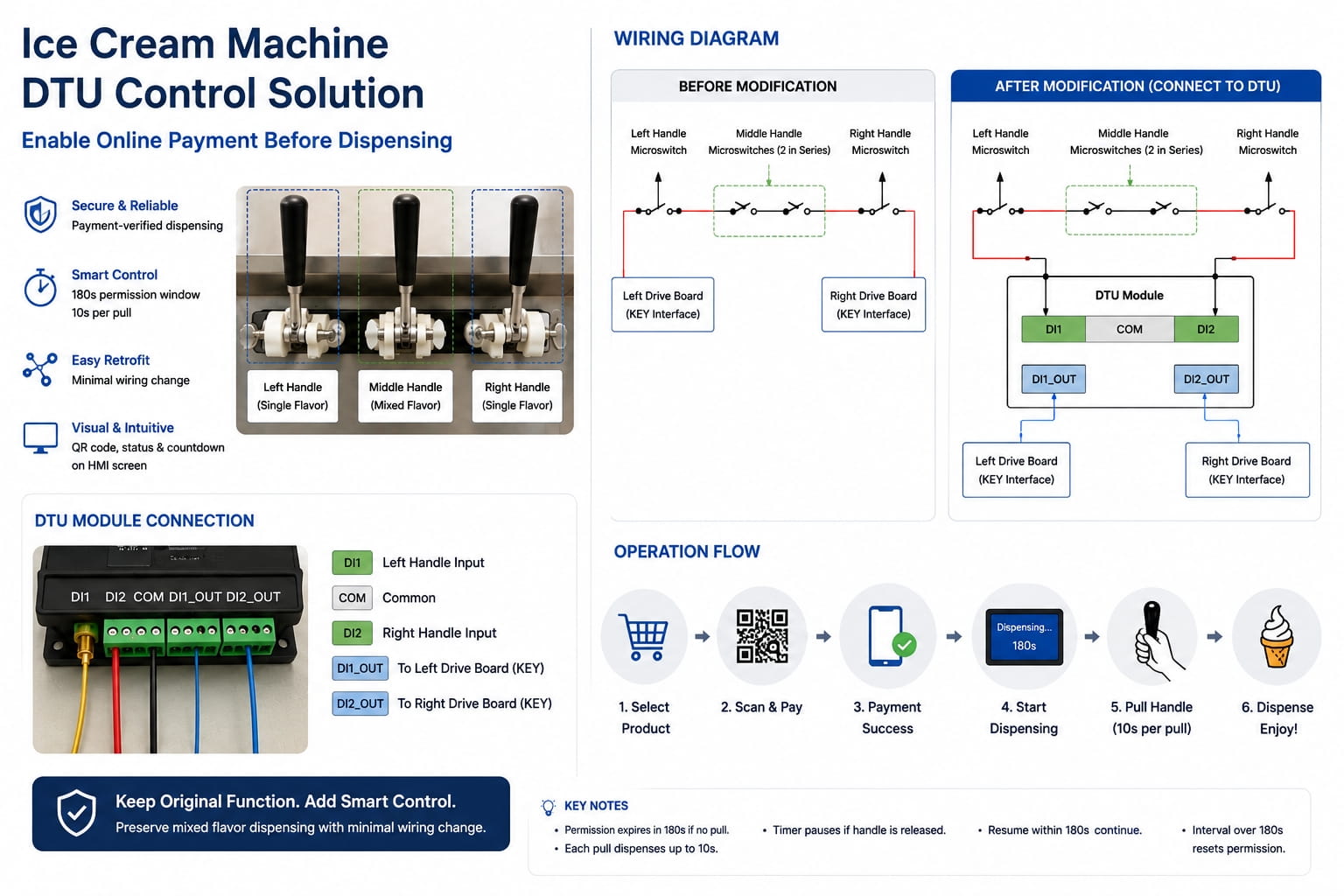
Phase 2: Direct Integration with Thailand’s QR Payment Ecosystem
To support Thailand’s rapidly growing cashless economy, we directly integrated multiple mainstream Thai QR payment channels.
Integrated payment methods included:
- GB Thai QR
- SCB Thai QR
- LINE Thai QR
- TrueMoney Pay QR
Consumers can now complete purchases instantly through QR code payments without relying on cash or coins.
Phase 3: Building Scalable Retail Operations Infrastructure
To support long-term growth and enterprise operations, we planned and gradually deployed several core operational systems.
- Warehouse & Inventory Management
- Unified OTA Software Management
- Multi-Tenant Financial Reconciliation System
Results
Within months of deployment, BosTech Engineering achieved significant operational improvements across its automated retail business.
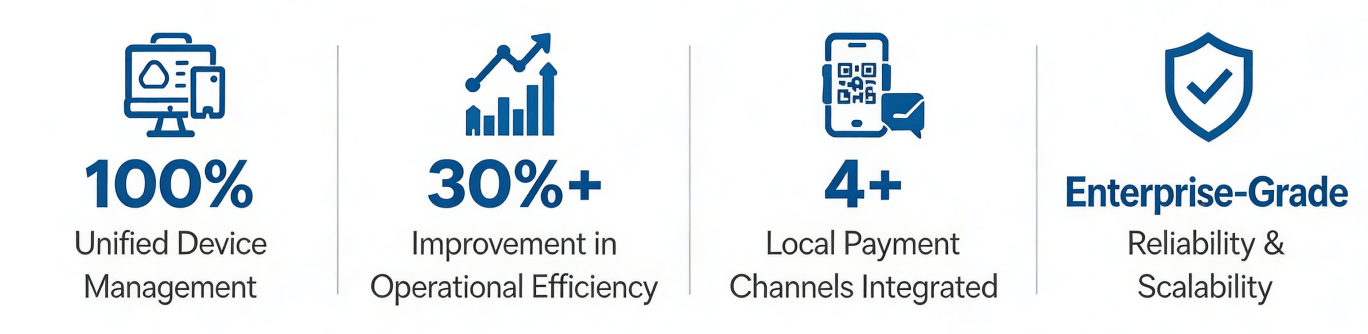
- 100% of heterogeneous vending equipment — including refurbished Fuji machines, orange juice machines, and noodle vending machines — unified under one management platform
- Successful integration with 4+ major Thai QR payment channels
- Estimated 30%+ operational efficiency improvement through automation in logistics, replenishment, and reconciliation
- Enterprise-grade reconciliation support for customers including BYD and Big C
Looking Ahead: From Machine Operator to Smart Retail Infrastructure Provider
Following the successful platform modernization, BosTech plans to further expand its smart retail capabilities.
Future initiatives include:
AI-Powered Smart Replenishment
Automatically generating replenishment recommendations based on:
- Sales data
- Weather conditions
- Seasonal trends
- Holidays
Membership & Loyalty Ecosystem
Cross-device loyalty points and personalized promotions across vending networks.
挑战
随着泰国自动化零售市场加速发展,BosTech Engineering 在快速扩张中面临日益增长的运营挑战。
尽管拥有扎实的工程基础,公司仍遇到三大障碍:
1. 碎片化的设备生态
BosTech 运营着高度多样化的售货设备阵营,包括:
- 翻新日本富士(Fuji)自动售货机
- 咖啡自动售货机
- 方便面自动售货机
- 鲜榨橙汁机
- 爆米花自动售货机
- 冰淇淋自动售货机
每类机器运行在不同软件系统上,集中管理几乎不可能实现。
2. 过时的现金支付基础设施
许多传统售货机只支持现金与硬币支付,而泰国的 QR 支付生态已迅速成为消费者主流的支付方式。
3. 缺乏统一的零售运营软件
BosTech 缺少集中化的运营后端,覆盖:
- 库存与仓库管理
- 远程软件版本控制
- 会员与忠诚度运营
- 自动化财务对账
挑战更为严峻的是,BosTech 不仅运营自有售货机,还为比亚迪(BYD)和 Big C 等企业客户提供托管售货服务。
方案:为每一台机器打造统一平台
我们没有替换现有硬件,而是设计了分阶段现代化战略,聚焦于:
- 保留现有机器资产
- 标准化软件基础设施
- 接入泰国本地支付生态
- 为 BosTech 及其客户构建可扩展的运营能力
第一阶段:老旧日本售货机硬件改造
为现代化改造富士等二手日本售货机,我们为机器升级了智能零售通信基础设施。
- 智能安卓触屏升级
- VCCS 集成
- 新机器的统一软件迁移
第二阶段:直连泰国 QR 支付生态
为支撑泰国快速发展的无现金经济,我们直接集成了多个泰国主流 QR 支付渠道。
集成的支付方式包括:
- GB Thai QR
- SCB Thai QR
- LINE Thai QR
- TrueMoney Pay QR
如今消费者无需现金或硬币,即可通过扫码即时完成购买。
第三阶段:构建可扩展的零售运营基础设施
为支撑长期增长与企业级运营,我们规划并逐步部署了多个核心运营系统。
- 仓库与库存管理
- 统一 OTA 软件管理
- 多租户财务对账系统
成果
部署后数月内,BosTech Engineering 的自动化零售业务实现了显著的运营改善。
- 100% 的异构售货设备——包括翻新富士机器、橙汁机与方便面机——统一到同一管理平台
- 成功对接 4+ 个泰国主流 QR 支付渠道
- 通过物流、补货与对账自动化,运营效率提升约 30%+
- 为比亚迪与 Big C 等客户提供企业级对账支持
展望:从设备运营商到智能零售基础设施提供商
在平台现代化成功之后,BosTech 计划进一步扩展其智能零售能力。
未来举措包括:
AI 驱动的智能补货
基于以下因素自动生成补货建议:
- 销售数据
- 天气状况
- 季节趋势
- 节假日
会员与忠诚度生态
跨设备打通售货网络的忠诚度积分与个性化促销。