7-Eleven: Scaling Mini Stores with Offline-Resilient Smart Retail System7-ELEVEN:以离线韧性智慧零售系统规模化 Mini Store
100% transaction reliability. No more revenue loss caused by unstable network100% 交易可靠性,不再因网络不稳定造成收入损失。
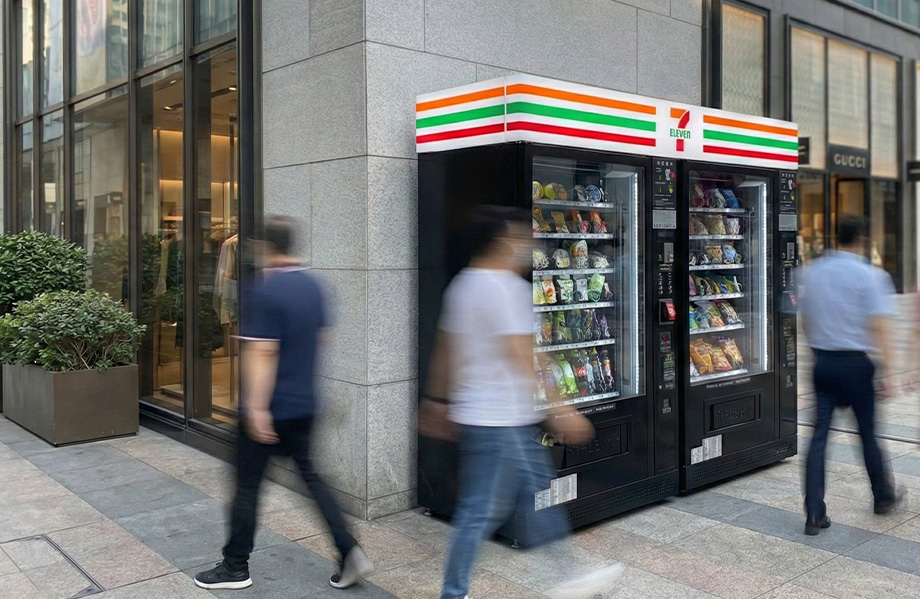
7-Eleven operates one of Asia's densest convenient store networks in Taiwan. To reach high-traffic locations like offices, transit hubs, and campuses, the brand deployed "Mini Stores." These are satellite vending units that stock beverages, fresh food, and daily essentials.
Operating these 24-hour unattended retail points presented unique challenges that traditional stores never face. The network required a software-driven infrastructure capable of handling Taiwan’s fragmented payment landscape and keep transactions running in locations with unstable connectivity.
The challenge: Unstable network and fragmented payment
Before implementing a unified smart retail platform, the Mini Store operation faced critical hurdles that threatened the viability of the business model:
- Connectivity constraints: Traditional vending systems rely on constant cloud connections. In basements or remote corners with weak signal, machines often went offline. Every dropped connection meant lost revenue.
- A complex payment landscape: Consumers in Taiwan use a mix of cash, coins, and digital methods (LinePay, JKOPAY, EasyCard, iCash). Existing systems struggled to integrate these into a single interface.
- Mixed hardware types: The fleet consisted of new and legacy machines. Centralized management and data synchronization was nearly impossible.
- No visibility into operations: Without real-time data, operators could not optimize replenishment. Stockouts and spoilage followed, a serious problem for fresh food.
To support sustainable expansion, 7-Eleven Taiwan needed a robust, offline-resilient software platform to unify diverse hardware and guarantee transactions under any network condition.
The solution: Jingpin Hitech AIoT + SaaS with hybrid architecture
7-Eleven partnered with Jingpin Hitech to deploy a smart retail management system built for reliable self-service commerce. Unlike cloud-only solutions, Jingpin Hitech implemented a hybrid edge-cloud architecture.
Three core pillars for this solution:
- Edge-Computing transaction engine: Ensures full operational capability without internet access.
- Unified payments: Integrates 90% of Taiwan’s mainstream payment methods into one system.
- Error-proof user experience: A simplified UI designed to minimize user friction.
Implementation: Building a resilient unattended retail network
Phase 1: Ensuring transaction continuity through offline mode
The system caches product data and transaction logic locally on device.
When network connectivity drops, the system automatically switches to offline mode. Customers continue purchasing with cash or stored-value cards.
Transaction data is stored locally and synchronized to the cloud once connectivity returns. No data is lost. Financial reconciliation stays accurate.
Phase 2: Unifying payment processing
Jingpin Hitech system is compatible with various payment hardwares. It supports:
- Cash: Coins and banknotes, still essential for certain customer segments.
- IC Cards: EasyCard, iCash, and other transit cards.
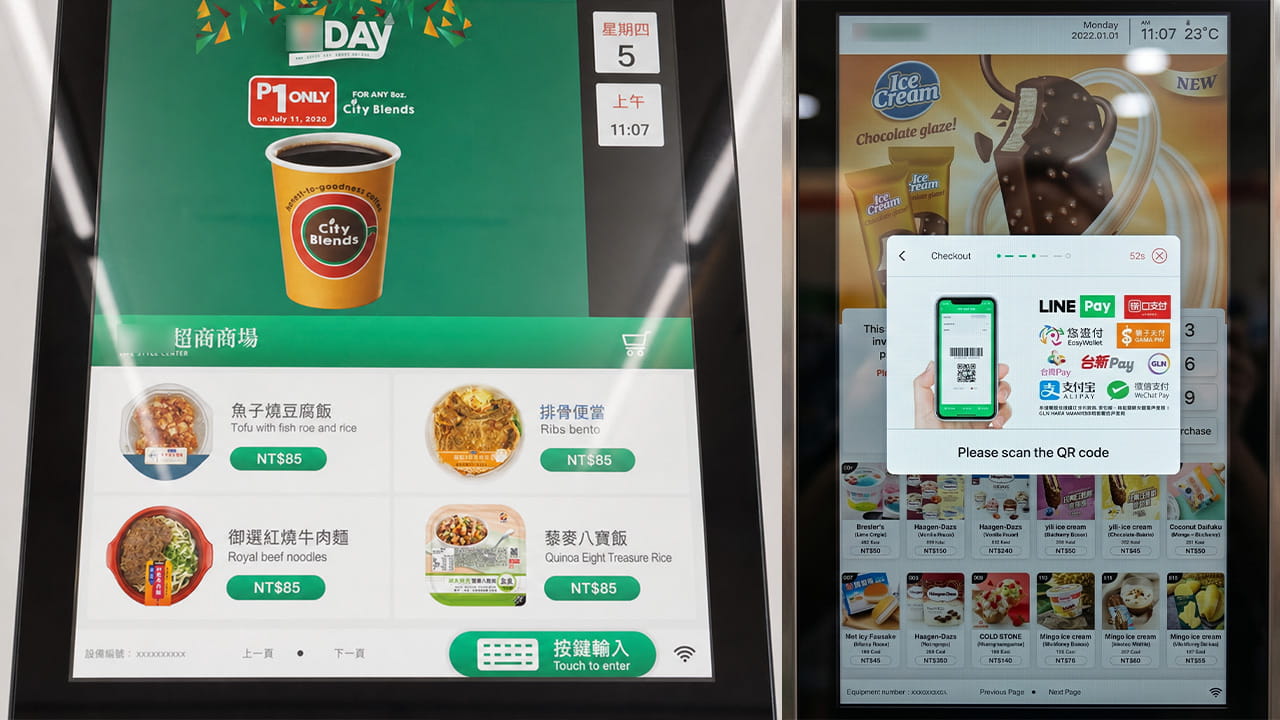
- Mobile Payments: QR code scanning for LinePay, WeChat Pay, and Alipay.
Phase 3: Data-driven operations
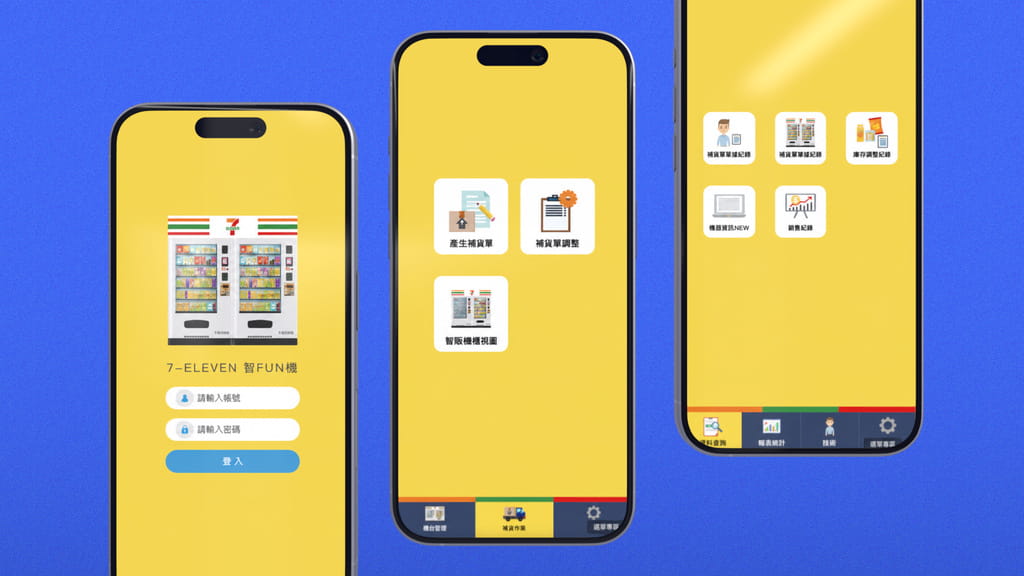
With devices connected, Jingpin Hitech deployed a SaaS platform for centralized operations. Fleet managers view real-time inventory, temperature, and device health on a single dashboard.
Key capabilities delivered
Offline-resilience
The system is able to process transactions in dead zones. By storing business logic at the edge, a lost internet connection never results in a lost sale.
Smart inventory & restocking
The platform generates stockout reports and track sales in real time. Field operators receive precise replenishment plans. This reduces unnecessary trips and ensures fresh items, such as bento boxes, remain available during peak hours.
Simplified user interface
Complex interfaces deter users. Jingpin Hitech designed a custom H5 interface with error-prevention principles. Large elements and simplified flows allow users of all ages to complete purchases with minimal cognitive effort.
Unified hardware management
The platform acts as a middleware layer. 7-Eleven Taiwan manages a mixed fleet of vending hardware, including retrofitted second-hand machines, in one system. This extends the lifecycle of existing assets.
Results: Robust expansion
- 100% transaction reliability: Offline transaction caching eliminated revenue loss caused by unstable network.
- Business stability: The digital infrastructure allowed the operation to shift from maintenance to expansion.
- New formats: The flexible software foundation supports new retail formats, such as pay-per-use beverage processing machines.
With Jingpin Hitech, 7-Eleven Taiwan has extended its retail footprint into locations that traditional stores cannot reach. The Mini Store network delivers the convenience store experience anywhere, anytime.
7-ELEVEN 在台湾运营着亚洲密度最高的便利店网络之一。为了覆盖办公室、交通枢纽与校园等高流量点位,品牌部署了「Mini Store」——售卖饮料、鲜食与日用品的卫星式售货单元。
运营这些 24 小时无人零售点位,带来了传统门店从未面临过的独特挑战。网络需要一套软件驱动的数字基础设施,既能应对台湾碎片化的支付环境,也能在连接不稳定的点位保证交易持续进行。
挑战:网络不稳定与支付碎片化
在引入统一智慧零售平台之前,Mini Store 运营面临多个威胁商业模式可行性的关键障碍:
连接受限: 传统售货系统依赖持续云端连接。在地下室或信号薄弱区域,机器经常离线,每一次断连都意味着收入损失。
复杂的支付环境: 台湾消费者使用现金、硬币与数字支付(LinePay、街口支付、悠游卡、iCash)的混合方式。原有系统难以将这些方式整合进统一界面。
混合硬件类型: 设备阵营由新机器与旧机器构成,集中管理与数据同步几乎不可能。
运营不透明: 缺少实时数据,运营方无法优化补货,缺货与损耗随之而来——这对鲜食而言是严重问题。
为支撑可持续扩张,台湾 7-ELEVEN 需要一套稳健、可离线运行的软件平台,统一多样硬件,并保证任何网络条件下交易不中断。
方案:京品高科 AIoT + SaaS 混合架构
7-ELEVEN 与 京品高科 合作,部署一套为可靠自助零售设计的智能零售管理系统。与纯云方案不同,京品高科 采用边缘-云端混合架构。
方案三大核心支柱:
边缘计算交易引擎: 无网络连接时也能保持完整运营能力。
统一支付: 将台湾 90% 的主流支付方式整合进一个系统。
防错用户体验: 简化界面设计,最大限度减少用户操作摩擦。
落地:构建有韧性的无人零售网络
第一阶段:离线模式保障交易连续性
系统在设备本地缓存商品数据与交易逻辑。
当网络连接中断时,系统自动切换至离线模式,顾客可继续使用现金或储值卡购买。
交易数据本地存储,网络恢复后自动同步至云端,数据零丢失,财务对账保持准确。
第二阶段:统一支付处理
京品高科 系统兼容多种支付硬件,支持:
- 现金:硬币与纸币,对部分客群仍然必要。
- IC 卡:悠游卡、iCash 及其他交通卡。
- 移动支付:LinePay、微信支付与支付宝扫码。
第三阶段:数据驱动运营
设备联网后,京品高科 部署 SaaS 平台实现集中运营,设备管理团队可在单一看板上查看实时库存、温度与设备健康状态。
交付的关键能力
离线韧性
系统能在信号盲区处理交易。通过在边缘侧存储业务逻辑,网络中断永远不会导致交易流失。
智能库存与补货
平台生成缺货报告并实时跟踪销售,现场运营人员获得精准的补货计划,减少无效跑动,确保便当等鲜食在高峰时段不断货。
简化用户界面
复杂界面会劝退用户。京品高科 以防错原则设计了定制 H5 界面:大元素与简化流程让各年龄段用户都能以最低认知负担完成购买。
统一硬件管理
平台充当中间件层,台湾 7-ELEVEN 在单一系统中管理包括翻新二手设备在内的混合售货硬件,延长了现有资产的使用寿命。
成果:稳健扩张
100% 交易可靠性: 离线交易缓存消除了因网络不稳定造成的收入损失。
业务稳定性: 数字基础设施让运营从「维保模式」转向「扩张模式」。
新业态: 灵活的软件底座支持按次付费饮品加工机等新零售业态。
借助 京品高科,台湾 7-ELEVEN 把零售足迹延伸到了传统门店无法覆盖的地方。Mini Store 网络让便利店体验随时随地可得。